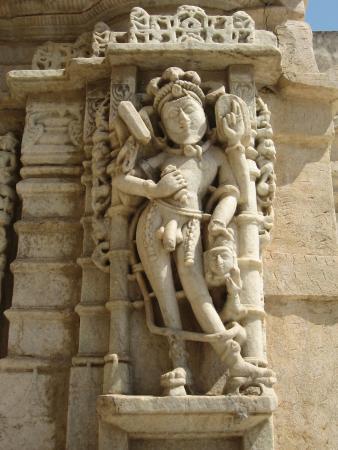
Moksha at Shikharji
The holy peaks of Parasnath in present-day Jharkhand — where the soul of Suparshvanatha attained eternal liberation. A pilgrimage venerated by every Jain heart.
Across stone, scripture and symbol, the radiance of Suparshvanatha Bhagwan endures. Each temple-stone, each verse, each daily ritual is the soft echo of his liberation, reaching us still.
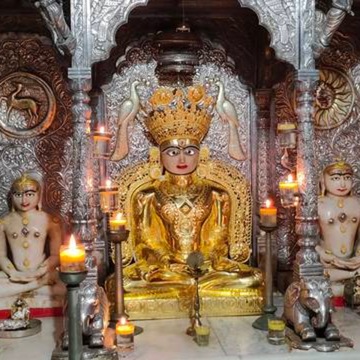
The lakshana of Suparshvanatha — a canopy of seven naga hoods symbolising awakened consciousness, protection and transcendence over fear.
His teachings flow through Jain Agamas and revered hymns, sustaining spiritual practice from the era of his presence to our own.
In the lineage of the twenty-four Tirthankaras of the present descending half-cycle, Suparshvanatha Bhagwan stands as the seventh — preceded by Supremely Auspicious Padmaprabha and followed by Chandraprabha. Each Tirthankara reveals the same eternal dharma anew, in a form suited to the spiritual climate of their age.
His emblem — the swastika — speaks of cyclical balance and of the right turning of the wheel of dharma. His divine canopy of seven serpent hoods identifies him in countless paintings, sculptures and miniatures across India and beyond.
He is venerated alongside the entire Tirthankara mandala in the daily rituals of Digambara and Shvetambara traditions alike — a living thread in the wide weave of Jain devotion.
Each symbol is a doorway. To meditate upon these forms is to step quietly into the qualities they hold — purity, awakening, protection, peace.
Devotion is not a single act but a quiet rhythm of remembrance — chanted, observed, and woven into the texture of an unhurried life.
Devotees chant stutis and stotras in his praise, kindling a quiet inner light through the resonance of sacred words.
A gentle examination of conscience — turning toward the soul's true direction whenever the day has carried us astray.
On Phalguna Krishna 6 and other auspicious occasions, fasting becomes a doorway into stillness and inner clarity.
Walking with reverence to Shikharji, Varanasi, and ancient Suparshvanatha temples — every step a remembrance.
Step into a curated gallery of murtis, temples, paintings and symbols — visual offerings of devotion across the ages.